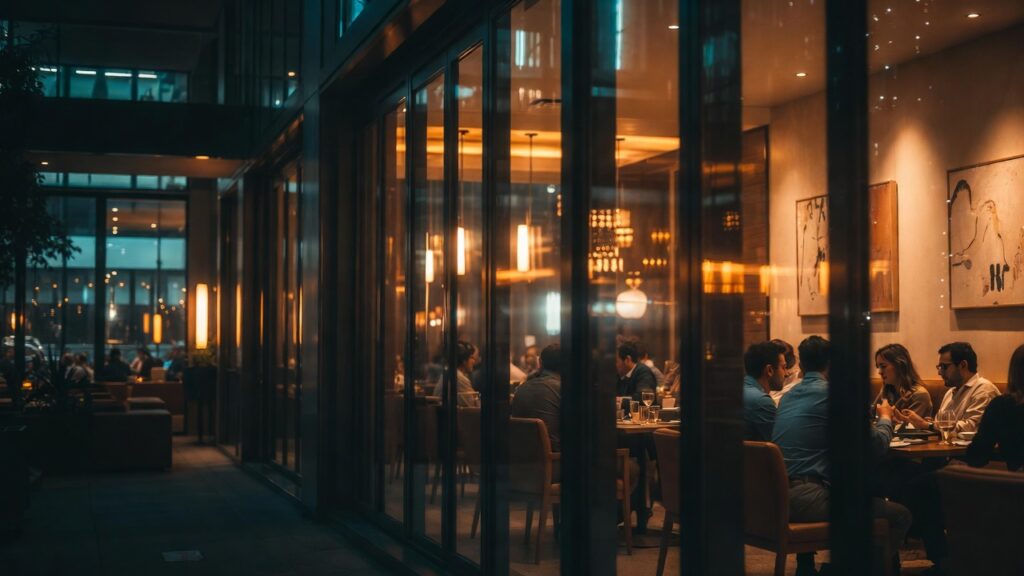

In a city that never stops, food becomes more than something to eat — it turns into a ritual, a pattern that grounds people between chaos and comfort. Every meal feels like a small gamble against the rush of everyday life. You walk into the same restaurant, sit at the same corner, order the same dish, as if you’re placing a silent bet that today will taste just like yesterday — or maybe better.
It’s strange how repetition can feel alive. The plate might change slightly, the lighting may shift, the playlist might be different, yet something inside says, “this is home.” There’s an invisible slot of familiarity that we keep spinning — taste, smell, memory, routine. And when it all aligns, when everything hits perfectly, it feels like a quiet jackpot that no machine can match.
The Rhythm Behind Every Bite
Urban dining culture isn’t really about discovering new tastes. It’s about finding meaning in repetition. You don’t return because you’re out of ideas; you return because that place remembers you back. The waiter nods, the cook smiles, and you already know how the sauce will taste before it even hits the table.
It’s human instinct to seek pattern — that’s how comfort is built. Just like a slot player trusts rhythm more than reason, people trust familiar flavors more than novelty. Every dish carries odds: sometimes bland, sometimes brilliant, but never meaningless. Even when the taste misses, the act of showing up becomes its own kind of win.
Maybe that’s why dining feels spiritual in a city obsessed with speed. Every bite is a slow rebellion. A moment to stay still while everything else keeps spinning.
Between Routine and Risk
There’s something poetic about taking the same route every evening, passing the same flickering sign, pushing open the same heavy door. It’s predictable — but that’s what makes it safe. People talk about thrill, but in truth, comfort is the biggest gamble of all.
Each dinner holds a chance. Maybe you’ll see someone familiar, maybe the cook will change the seasoning, maybe you’ll hear a story that shifts your mood entirely. And sometimes, that’s enough. That’s the pull — not of hunger, but of possibility.
When people call dining “an experience,” they often forget it’s also a performance. We play our parts — the eater, the talker, the listener — all within a shared moment of warmth and noise. We lose count of time because that’s how we know it’s working.
The Unspoken Game of Memory
Food never stands alone. It carries ghosts. A bowl of noodles might remind you of college nights, a plate of rice might smell like home after a storm. The flavor is just a trigger — what you’re really chasing is the memory attached to it.
Psychologists call it intermittent reinforcement — the same system that keeps people spinning slot reels. Not every visit feels special, but once in a while, it hits. That rare emotional jackpot, that single spark of nostalgia, keeps you returning again and again.
We don’t chase food for its taste; we chase it for its timing. We hope that between hunger and routine, we’ll stumble on a moment that feels like alignment — where taste, mood, and memory hit in one clean line.
A Slow Gamble with Time
Cities are efficient machines. They reward speed, precision, and output. But food slows us down — it demands presence. You can’t multitask a meal. You can’t automate taste. For a few minutes, you surrender control to your senses.
Every dinner becomes a bet against emptiness. You wager time for connection. You risk silence for conversation. You spend just to feel alive. And somehow, that’s what makes it worth it. The table becomes a shared slot — everyone hoping their spin lands on laughter, warmth, or maybe closure.
Some call it indulgence. Others call it survival. Either way, it’s the most human kind of gamble there is.
Between Hunger and Hope
The city rarely gives space to breathe, but food still does. It’s the last ritual untouched by screens. People can scroll through everything else, but they can’t digitize flavor. They have to sit down, wait, taste, feel.
Maybe that’s why dining never dies — because it’s one of the few bets we take willingly, without money on the line, just appetite and emotion. The stakes are personal, and the reward is invisible but real.
In the end, eating is never just about what’s on the plate. It’s about the pull — the one that keeps us returning to the same places, again and again, chasing the feeling that maybe, for tonight, everything will align perfectly.